September 26, 2026
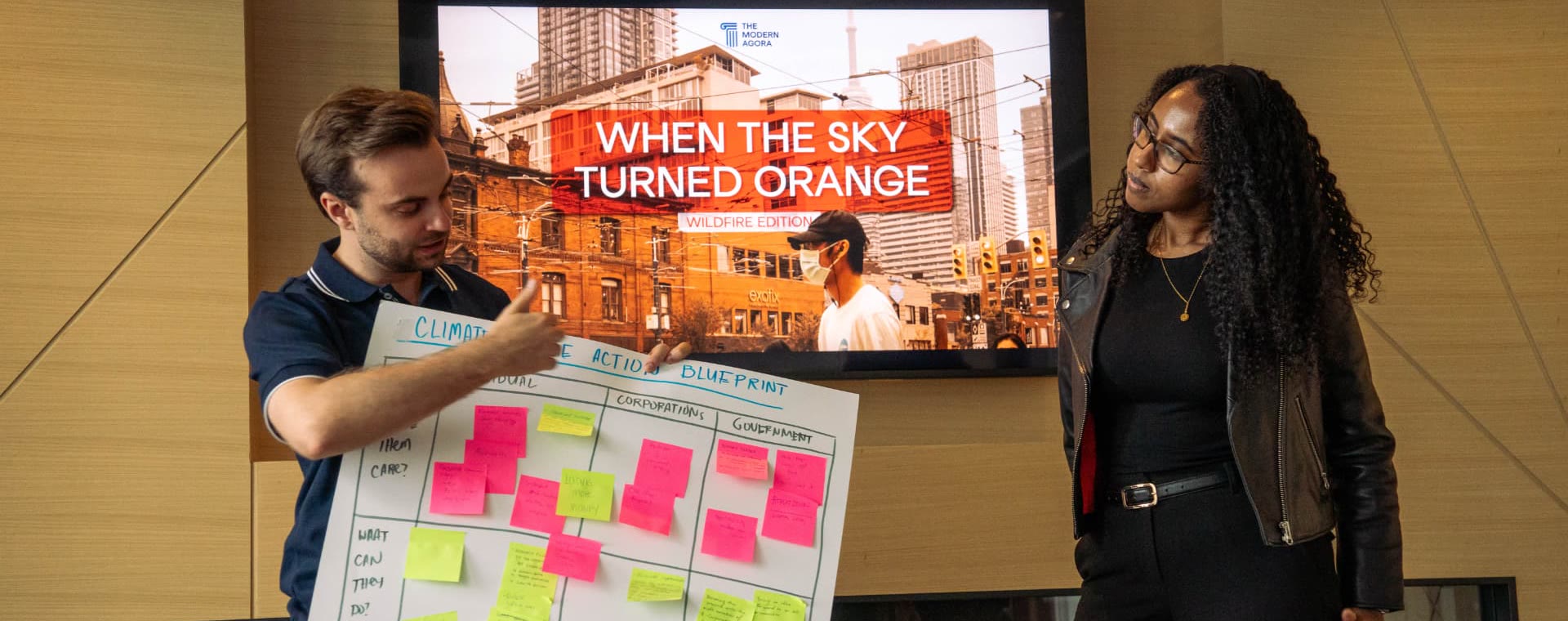
On July 15, 2026, Toronto awoke under an orange haze, temporarily holding the worst air quality index of any major city in the world. This prompted us to organize a themed edition of The Modern Agora focused on addressing wildfires.
Keynote Speakers
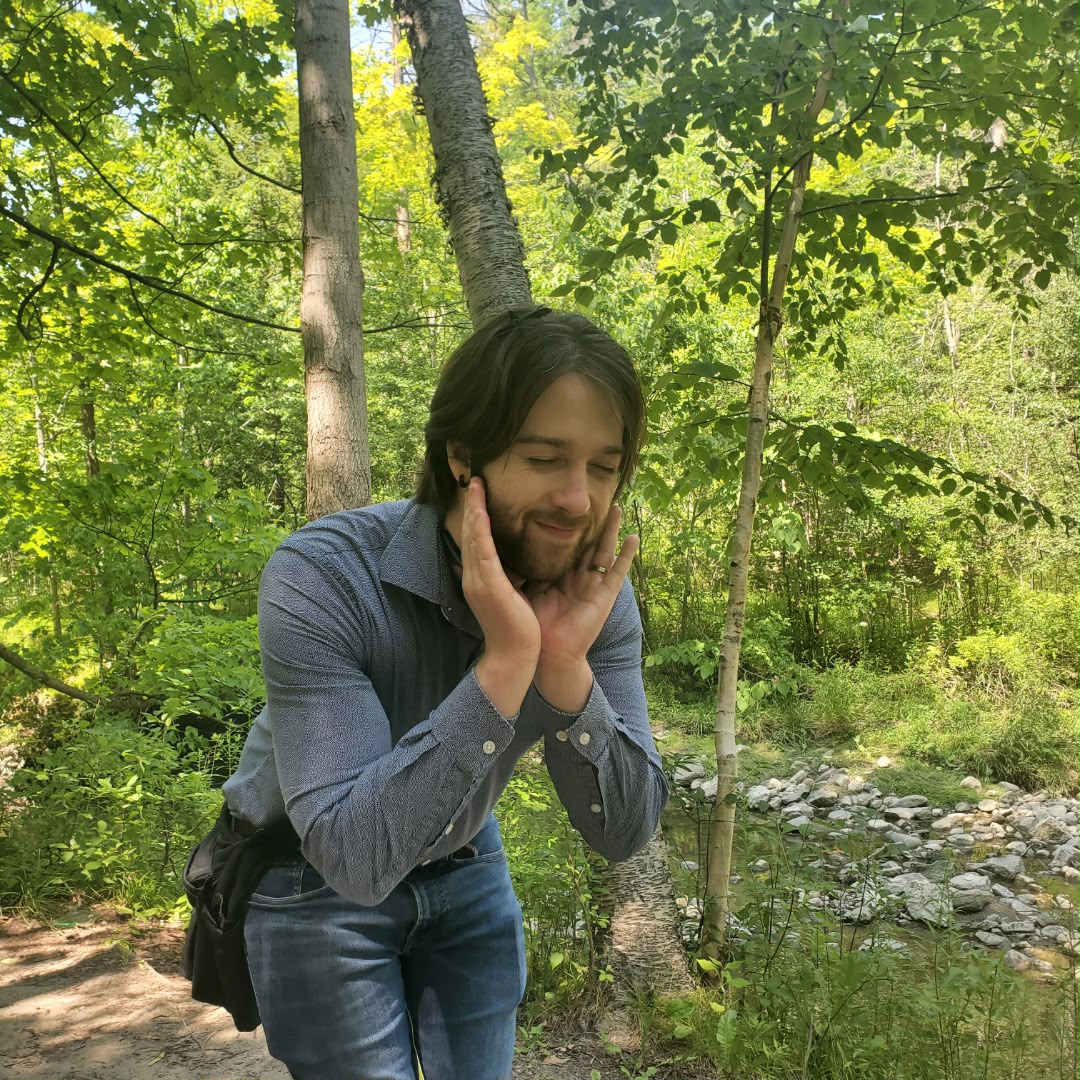
David Hunter
Master's Candidate in Spatial Analysis, Toronto Metropolitan University (TMU)
David shared preliminary findings from his research on using spatial technology to predict, track, and map wildfires across Canada.
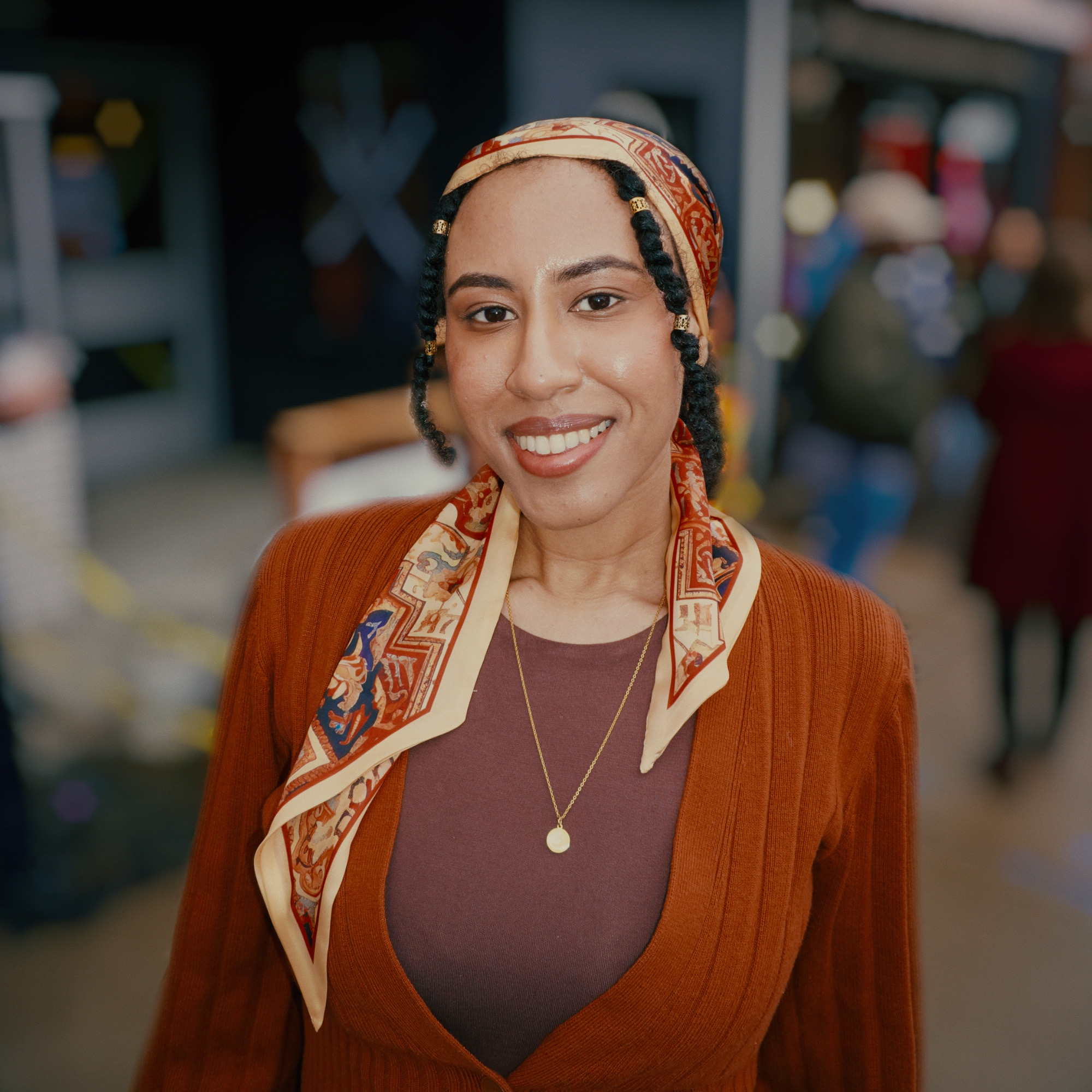
Randa Ali
Writer covering climate, culture, and arts | MSc in Sustainability, University of Toronto
Randa explored why wildfires can no longer be viewed strictly as isolated natural disasters, contextualizing them within human-driven climate change and offering frameworks for effective, empathetic climate communication.
Workshop & Group Findings
Following the presentations, attendees split into two break-out groups to address the issue from different angles.
Group 1: Systemic Climate Engagement & Action
This group systematically analyzed how to bridge the gap between awareness and meaningful action across three key levels:
Individual Level
Affordability and the lack of financial incentive are major barriers to sustainable choices. Establishing practical incentives - such as a localized deposit-return program - makes sustainable habits accessible. Group members emphasized that our agency grows exponentially when neighbors organize for collective local action.
Corporate Level
Many businesses possess CSR (Corporate Social Responsibility) budgets but lack concrete, high-impact implementation proposals. Sustainable practices directly strengthen brand trust and customer loyalty. For example, local supermarkets could increase their visibility and customer loyalty by offering discounts or cash-back rewards for recycling plastic bottles.
Governmental Level
Similar dynamics apply politically. Local public officials gain voter trust and visibility when supporting tangible, neighborhood-focused environmental programs.
Group 2: Wildfire Mitigation, Response & Long-Term Resilience
This group looked at how we can address wildfires in the short-, mid- and long-term.
Actionable steps that can be implemented today, including public air-quality education, local fire-safety workshops, and improved inter-agency communication for crisis responders.
Infrastructure and policy updates, such as advanced wildfire tracking and monitoring systems, dedicated wildfire recovery frameworks, and updated air filtration standards for condo developments.
Deeper-rooted social and ecological shifts, including community trauma support, re-establishing traditional cultural practices around controlled burning, and expanding exchange with Indigenous communities.
Reflection
Listening to the presentations and engaging in the group discussions reminded our attendees that while the scale of climate change can feel overwhelming, local community spaces allow us to break complex global problems into relatable and actionable steps. Change needs to happen on all levels.
Featured Initiative
Toronto Supermarket Recycling Incentive
Based on insights generated during this Agora, Randa Ali and Leon Noel Merse are launching a local civic initiative.
They are drafting a proposal for local Toronto supermarkets and Members of Provincial Parliament (MPPs) to pilot a plastic bottle deposit-return system, modeled after successful European models like Germany's Pfand system.
How You Can Get Involved
We are actively seeking collaborators to help bring this pilot project to life. We welcome assistance in:
- •Co-authoring and refining the policy proposal
- •Connecting with local business owners, supermarket management, and municipal/provincial representatives
- •Strategic planning and operational roadmap development
- •Community outreach and stakeholder engagement
Event Gallery
Follow our newsletter to hear about new initiatives coming out of the Agora, upcoming events and more.